
A pallet wrapping machine improves load containment, reduces film waste, reduces transit damage, reduces returns, and speeds up end-of-line shipping. An automatic pallet wrapping machine delivers consistent wrap tension and safer operation, especially when paired with palletizing automation.
Integrate with an automated conventional palletizer, or robotic palletizer to build and wrap pallets with repeatable results. A concurrent palletizer (palletize and strech wrap at the same time) is also an option, when it fits the application.
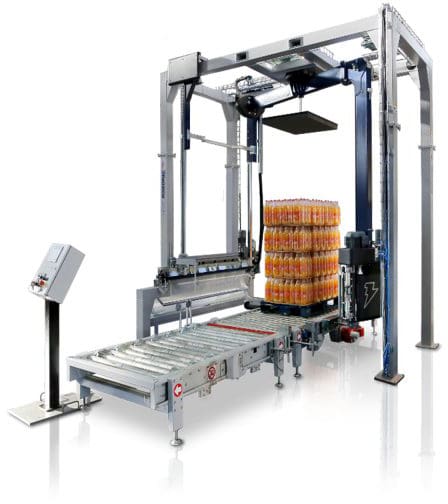
A transition to palletizing automation is not only about speed. It is about reliability, safety, and consistent performance shift after shift.
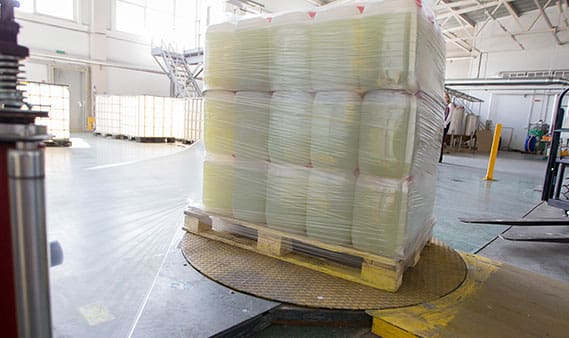
Moving to palletizing automation helps improve performance across your entire load-out process:
- Better wrap results when paired with an automatic pallet wrapping machine
- 24/7 reliability for consistent output
- Reduced labor overhead and fewer manual touchpoints
- Improved stack consistency for stronger, more stable pallets
- Faster throughput with fewer end-of-line bottlenecks
- Lower risk of repetitive strain injuries (RSIs) from manual pallet building
- Better wrap results when paired with an automatic pallet wrapping machine
An automatic palletizer machine paired with a pallet wrapping machine creates a cleaner, more consistent end-of-line process. Whether you need a flexible robotic palletizer or a high-speed conventional palletizer, the right solution reduces downtime and improves pallet quality. Get a quote for a fully integrated system built around your production goals.
Every facility has different products, throughput demands, and constraints. That is why an integrated solution is built around your operation, not the other way around. Our systems can pair a palletizer machine with an automatic pallet wrapping machine to create a seamless end-of-line workflow.
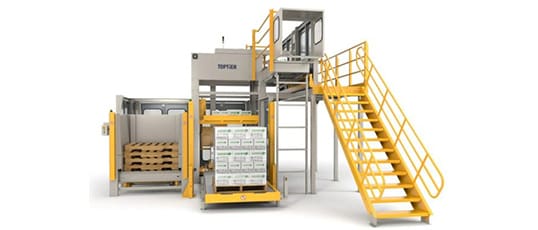
Infeed palletizers are ideal for continuous production environments where products are typically unitform and speed and rhythm matter most. These systems are built to support high-volume stacking of bags, cases, and cartons with repeatable layer formation and consistent pallet builds.
Infeed automatic palletizer machine configurations work well when packaging formats are consistent and throughput is a top priority.
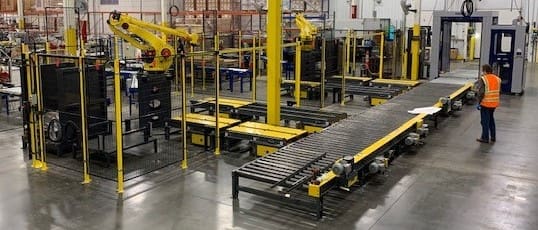
A robotic palletizer is often the best choice for mixed production lines, frequent changeovers, and multi-SKU facilities. Robotic systems provide flexibility for different case sizes, patterns, and line layouts while improving safety and reducing manual handling.
Robotic palletizing cells can be built around proven automation platforms and utilize reliable robot manufactures such as FANUC to help deliver long-term performance and easy scalability for future growth.
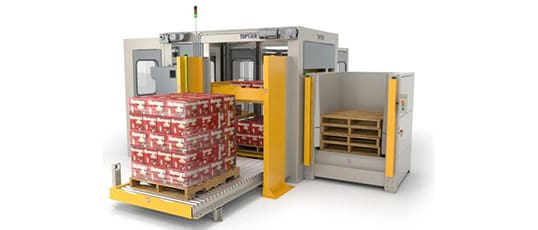
Low infeed palletizers are a smart fit for facilities working with limited ceiling height or tight floor space. These compact systems support consistent pallet builds while maintaining accessibility for routine operator tasks and maintenance. Low-level options can also be integrated with downstream wrapping for a complete end-of-line solution that improves throughput without expanding footprint
A modern pallet wrapping machine does far more than spin film. Integrated systems are designed to reduce downtime, simplify operator training, and support safer workflows across shifts.
Key technical capabilities may include:
✅ Modular system design for efficient integration into existing conveyor layouts
✅ Pattern-ready controls that support fast product changeovers
✅ An intuitive HMI (Human Machine Interface) for simplified operation and recipe selection
✅ Safety guarding with interlocks and optional light curtain integration
✅ High weight capacity support for heavy, tall, or unstable loads
✅ Precision placement and repeatable pallet patterns for improved stack consistency
✅ Wrapping consistency that helps reduce film usage and improve load containment
For operations seeking full end-of-line automation, pairing an automatic pallet wrapping machine with an automatic palletizer reduces manual touches while improving load integrity across every shipment.
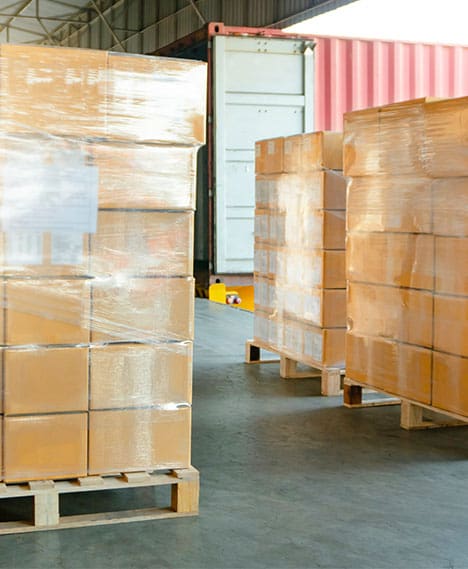
A well-integrated pallet wrapping machine and palletizer solution improves consistency across industries where shipment integrity, production speed, and labor reliability matter.

Food and beverage operations often manage high throughput, multiple packaging formats, and strict uptime demands. An automated palletizer helps stabilize production flow, while an automatic wrapper improves load containment for cold storage, distribution, and long-haul shipping.

Chemical and industrial products require stable pallet builds and secure wrapping to support safe movement and compliance. Palletizing automation improves repeatability and reduces the risk of pallet instability, especially for bag stacks and heavy containers.

CPG facilities benefit from speed and flexibility. A robotic palletizer can adapt to different products and SKUs, while an integrated pallet wrapping machine ensures consistent wrap force and dependable pallet containment for retail or distribution networks.

Buying equipment is only one part of improving end-of-line performance. Integration is where uptime, safety, and ROI are either protected or compromised.
Choosing an experienced integrator improves project outcomes by ensuring the palletizer, wrapper, conveyors, controls, and safety systems are engineered as a single, integrated system rather than separate components that may conflict after installation.
A standalone machine may appear less expensive initially, but disconnected equipment can create issues with communication, safety validation, changeover complexity, and long-term maintenance. Integration helps avoid these common problems while improving system performance and accountability.
An integrator-focused approach supports better ROI through:
This turnkey approach can include design, installation, and preventative maintenance packages to keep your system running reliably beyond the initial startup.
As part of our integrated packaging automation capabilities, we are an authorized integrator for Wexxar Packaging, Toptier, Robopac, Texwrap, and more. Our systems can also incorporate technology from key manufacturers like FANUC Robotics when robotic palletizing is the best fit.
Choosing the right pallet wrapping machine or integrated palletizing system comes down to throughput, load stability, and how often products change. These FAQs cover the most common questions about automatic pallet wrapping machines, palletizing automation, and the differences between conventional and robotic systems.
A conventional palletizer machine is built for high-speed, repetitive pallet patterns with consistent product flow. A robotic palletizer is ideal for mixed SKUs, frequent changeovers, and flexible line configurations.
Throughput depends on product type, infeed speed, pallet pattern complexity, and system design. A properly sized automatic palletizer machine can be configured to support your required rate while maintaining consistent pallet build quality.
Yes. Most automatic pallet wrapping machine systems can be set up to run multiple pallet dimensions using adjustable settings and recipe-based controls. If your operation ships mixed pallet sizes, the system can be designed for quick changeovers.
Stacking patterns are controlled by the automated palletizer, not the wrapper. Modern systems use an intuitive HMI that enables operators to quickly select new pallet patterns previously programmed with minimal downtime.
A pallet wrapping machine applies stretch film around pallet loads to improve containment and reduce shifting during storage and transport. It also helps create consistent wrap force and coverage, which is difficult to achieve with manual wrapping.
A semi-automatic wrapper typically requires an operator to start the cycle and handle pallet positioning. An automatic pallet wrapping machine is designed for hands-free operation and is often conveyorized, making it ideal for higher-volume facilities and integrated palletizing automation lines.
Yes. A pallet wrapping machine can be integrated with a palletizer, automatic palletizer, or robotic palletizer to create a streamlined end-of-line process with fewer manual steps and more consistent load quality.
If your production runs one or a few repeatable SKUs at high volume, a conventional automated palletizer may be the best fit. If your line changes frequently or requires multiple pallet patterns, a robotic palletizer offers the flexibility to adapt quickly.